
The high cost of bad search
Poor intranet search is more than an inconvenience, it’s a drain on productivity and morale. According to the International Data Corporation, employees spend nearly 2.5 hours per day searching for information, costing organizations millions annually. That’s time that could be spent on innovation, collaboration, or serving customers. When search consistently fails, employees create workarounds: storing files locally, pinging colleagues, or recreating existing documents. This not only slows everyone down but also weakens knowledge sharing across the company.
Why traditional intranet search falls short
Classic keyword-based search relies on exact matches. Misspell a word? Use the wrong synonym? Forget the exact file name? You’re out of luck. Even when search results are “correct,” they often lack relevance or context, forcing employees to sift through dozens of unrelated items. Add in the complexity of multiple content sources like SharePoint sites, Teams channels, document libraries—and you get a search experience that feels fragmented and unhelpful.
How AI turns search into discovery
AI-powered search changes the game by understanding intent, not just keywords. Instead of matching exact text, AI uses natural language processing (NLP) to interpret the meaning behind a query. This means employees can search the way they speak (“What’s our parental leave policy?”) and still get accurate, contextual answers even if the document title is completely different. AI can also personalize results based on role, department, and usage history, making search results more relevant to each individual.
Breaking down silos with federated search
One of AI’s biggest advantages is its ability to perform federated search by pulling information from multiple sources and presenting it in a single, unified view. No more jumping between platforms or remembering where a document “should” be. Whether the content lives in SharePoint, Microsoft Teams, or an external knowledge base, AI ensures it surfaces in one place. This not only saves time but also strengthens cross-department collaboration by breaking down the walls between information silos.
Making search accessible for all
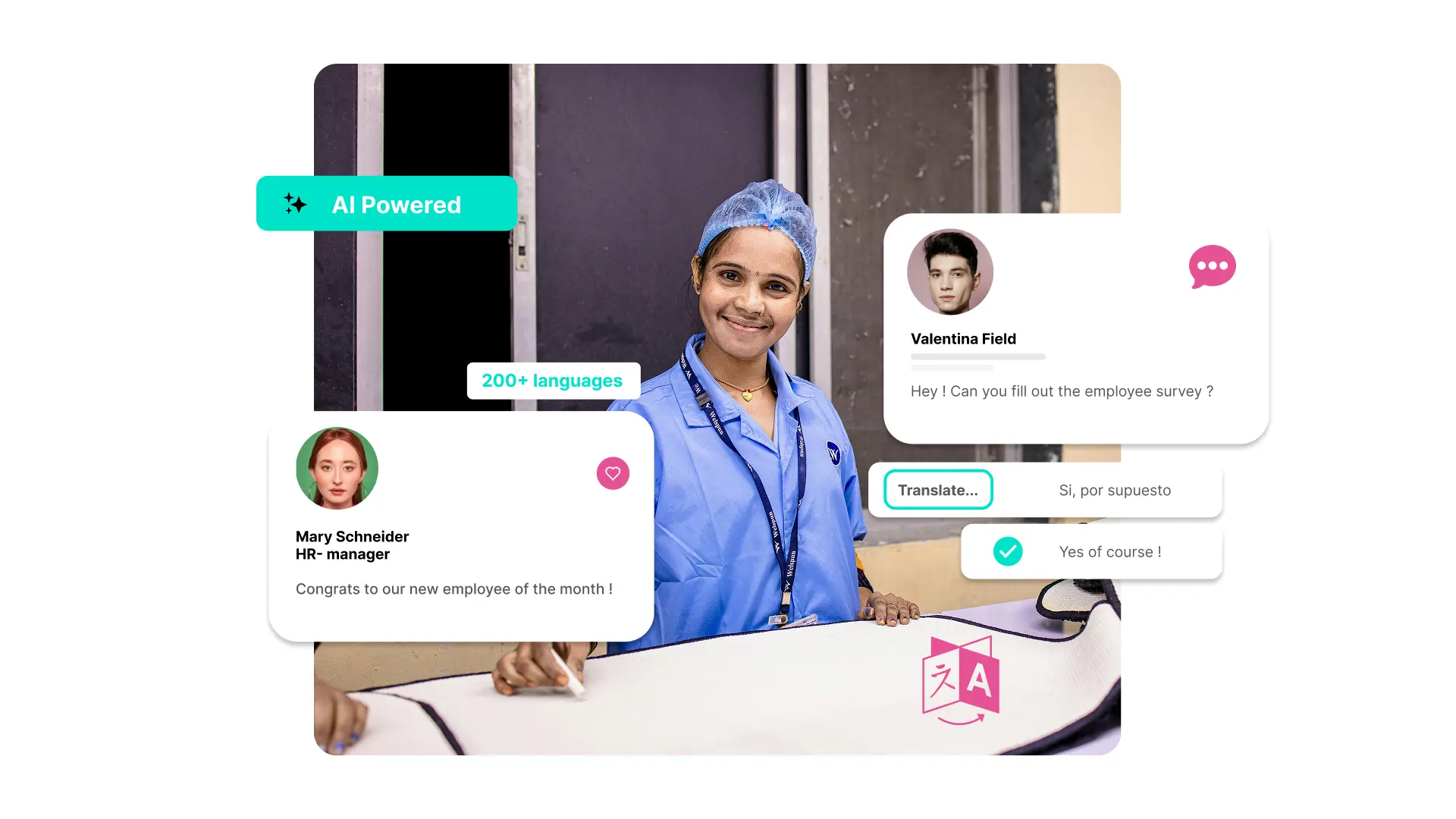
An often-overlooked benefit of AI search is accessibility. Text-to-speech can read results aloud for employees with visual impairments. Multilingual support can translate documents or queries in real time for global teams. AI can even suggest content proactively based on user behavior, reducing the need for manual searching altogether. These capabilities don’t just improve efficiency, they make your intranet inclusive for every employee, regardless of ability or location.
From frustration to trust: building confidence in search
Employees only use search tools they trust. AI-powered search earns that trust by delivering consistently accurate, relevant, and fast results. Over time, this changes workplace behavior: instead of bypassing the intranet, employees make it their first stop. The result? A central, reliable hub for company knowledge and one that supports decision-making, reduces duplication, and improves overall employee experience.
Powell: AI search that works for your people
At Powell, we believe search should be invisible because of how well it works, you barely notice it. Our AI-powered search is designed for the realities of modern work: hybrid teams, endless content sources, and the need for speed. Fully integrated with Microsoft 365, Powell unifies search across SharePoint, Teams, and your intranet so employees get answers in seconds, not hours. With role-based personalization, federated results, and accessibility features built in, Powell doesn’t just improve search, it transforms it into a driver of productivity, inclusivity, and engagement.
Conclusion: It’s time to stop the search struggle
Bad intranet search is costing you time, money, and employee goodwill. The frustration is real, but so is the solution. With AI, you can replace endless scrolling with instant discovery, making your intranet a place employees trust and enjoy using. The question isn’t whether you can afford to improve your search…it’s whether you can afford not to.