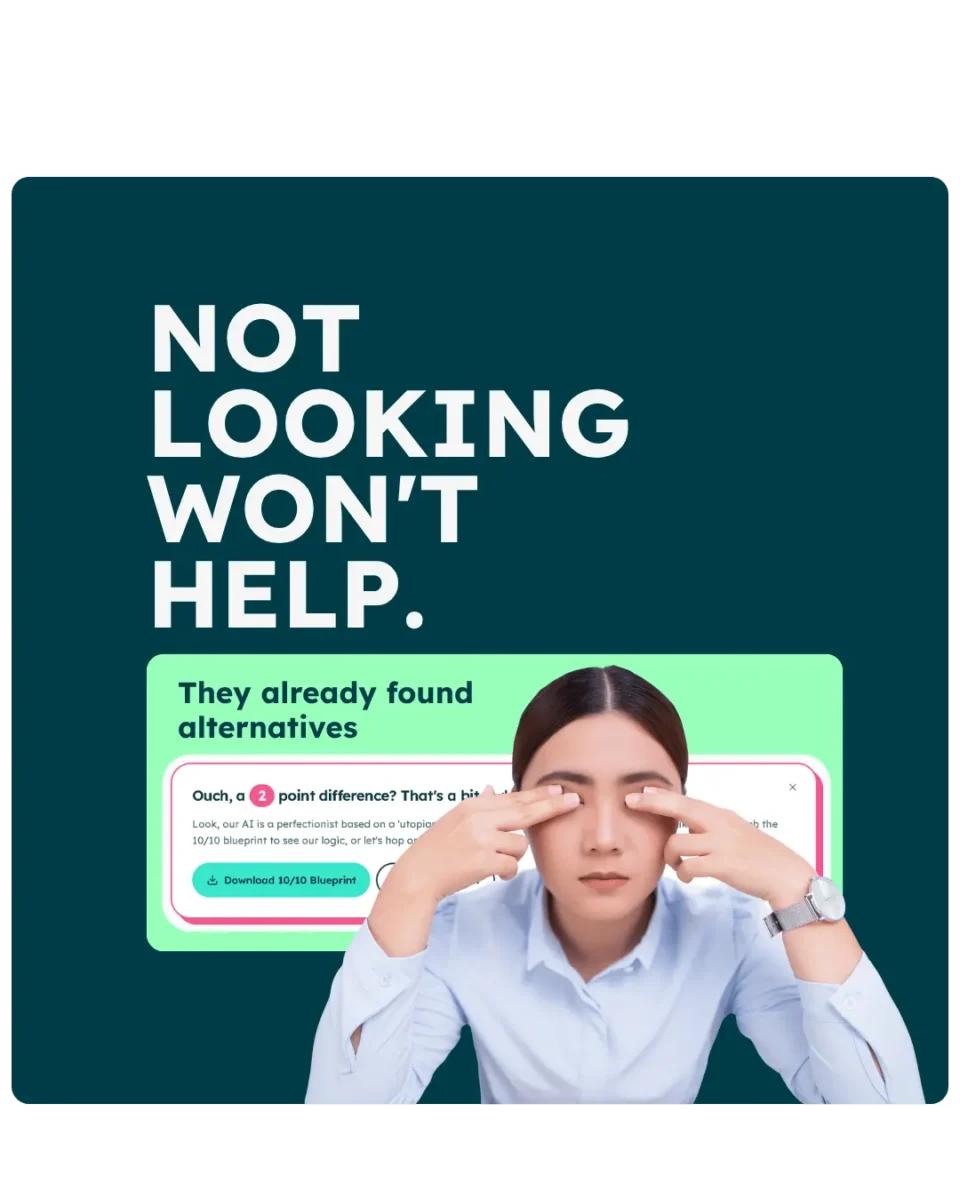

In most cases, employees do not start at the intranet homepage.
They skip it. They search elsewhere. They go straight to Teams. They ask a colleague. They use that old bookmarked link from 2021 that somehow still works.
Not because they are being difficult. Not because they secretly hate intranets. But because, at some point, the homepage stopped feeling useful.
Once employees learn they can ignore it, winning back their attention is not exactly a casual Tuesday task.
The issue is rarely one single broken link or one boring news item. It is usually a pattern: too much noise, not enough relevance, and no clear reason to come back.
Looks fine. Works poorly.
The homepage looks fine. So why is nobody using it?
This is one of the most common intranet problems. The homepage is branded. The layout is clean. The news is published. The quick links are there. There may even be a carousel bravely rotating through five updates nobody clicked on.
On the surface, everything seems fine. But “fine” does not mean effective.
Employees do not come to admire the layout.
They come because they need something: a policy, a form, a tool, a company update, or a clear answer to a very practical question.
If the homepage does not help quickly, they leave.
And if they leave enough times, they stop trying. That is how adoption quietly fades.
The main reasons
Seven ways a homepage accidentally trains employees to ignore it.
Usually, the homepage is not ignored because it is empty. It is ignored because the value is too hard to see.
1. It tries to say everything at once
Every announcement, every campaign, every department update, every “important” banner that was supposed to expire last month. When everything is urgent, nothing is.
2. It is built around content, not tasks
Many homepages are organized around what the company wants to publish. Employees are asking where to go, what changed, who to contact, and what matters to them.
3. It feels the same for everyone
A generic homepage is easy to manage. Unfortunately, it is also easy to ignore. Relevance disappears when everyone sees the same thing.
4. The important things are hidden in the noise
The right information may be there, but buried under banners, vague labels, and competing updates. If everything looks equally important, nothing stands out.
5. It does not change in a meaningful way
A homepage that never changes gives employees no reason to return. A homepage that changes constantly without structure creates a different problem: good luck.
6. Nobody owns the first impression
Without clear ownership, the homepage becomes a negotiation table instead of an employee experience. The question should be: what does the employee need to see first?
7. Employees do not trust it anymore
If employees repeatedly find outdated content, broken links, irrelevant updates, or confusing navigation, they learn not to rely on the intranet. One poor experience becomes two. Two become a habit.
What employees actually need
Employees do not need a homepage that does everything. They need one that helps them do the right things faster.
A strong intranet homepage should make priorities clear, help employees find essential tools and resources, surface timely updates, reduce noise, guide people to action, and feel trustworthy enough to come back to. It needs to cover 3 grounds:
The Monday morning test
The real question: would you come back?
Look at your intranet homepage as if you were an employee arriving on a busy Monday morning.
If the answer is “maybe,” that is worth looking into. And if the answer is “probably not,” congratulations: you have just experienced what many employees quietly decide every day.
From ignored to useful
From ignored homepage to trusted starting point.
Employees ignore intranet homepages when the value is not clear. Not because the intranet is doomed. Not because employees are impossible to please. And not because the homepage needs to become a digital circus with more widgets, banners, and moving parts.
It needs to become useful again. Clearer. More relevant. Easier to navigate. Less crowded. More connected to the way people actually work.
Your intranet homepage should not feel like a place employees are forced to visit. It should feel like the obvious place to start.
Less noise
More relevance
Better adoption
The question to ask next
If employees are ignoring your homepage, what made them leave?
When the homepage works, everything downstream works better too: communication, adoption, engagement, trust, and the overall digital employee experience.

Trinity Resting
Product Marketing Manager
Product marketing doesn’t have to be all jargon and slides—Trinity’s here to prove it’s about creating human connections. With 5 years in digital marketing, she’s been scaling, building, and transforming product strategies that resonate with real people. At Powell, Trinity ensures the message isn’t just heard, but felt. She’s passionate about helping teams go beyond the office and build lasting relationships. When she’s not crafting strategies, you’ll find her sipping tea (she’s a self-proclaimed tea-aholic) or working as a professional dog sitter—because, let’s be honest, dogs are the ultimate team players.